
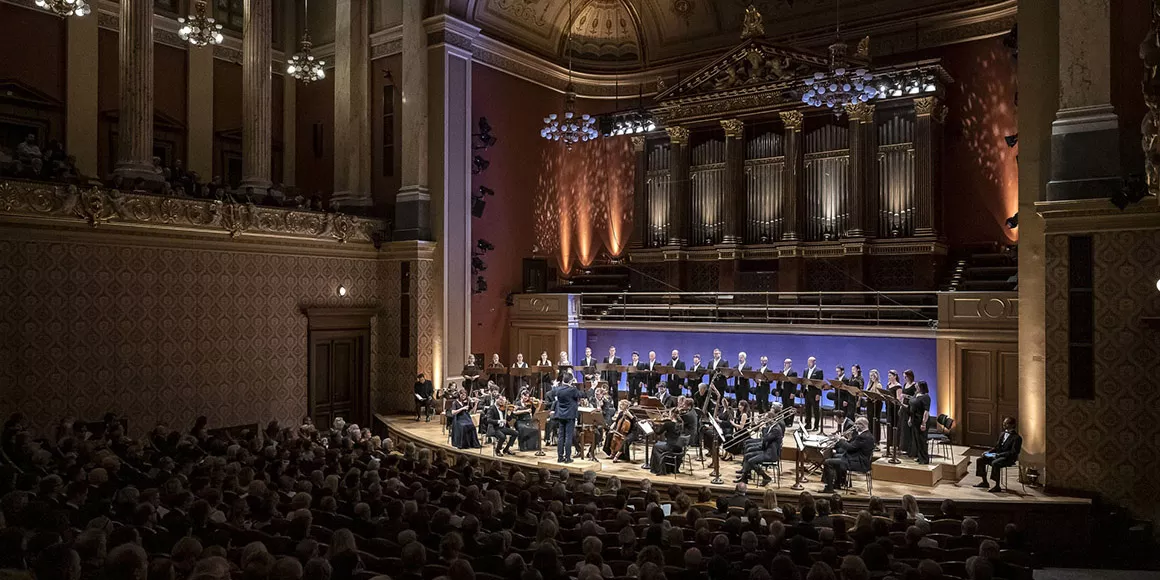


In his rendition of the Old Testament exodus of the Israelites from Egypt, which premiered in April 1739, Handel managed to recount the plot through musical means with such intensity, inventiveness, and conviction that the audience was literally breathless. The double-choir concept, the use of trombones, and the choir’s absolutely unheard-of recitative on the words ‘He sent a thick darkness’ contributed to this effect. Another largely experimental field for Handel were the arias, composed not to verse but to a biblical narrative in English. Later he produced only one oratorio set entirely to biblical prose – his Messiah, with a libretto by Charles Jennens based on New Testament texts, was premiered during the composer’s stay in Dublin in April 1742.
The oratorio Israel in Egypt deals exclusively with Old Testament texts. In the first part, a choral epic containing drastic descriptions of the plagues brought upon Egypt, Handel set mostly verses from Old Testament psalms. The second part, in which the Israelites praise the mighty acts of the Lord, is based on the almost complete 15th chapter of Exodus. While composing, Handel made extensive use of whole musical movements or sections from works by earlier composers, Alessandro Stradella, Dionigi Erba, Francesco Uriano, and Johann Kaspar Kerll. From his own works, he reused two keyboard fugues or single movements from Dixit Dominus and from the cantata Armida abbandonata.
Foto: Petra Hajská